Idol Prank Video Call & Chat
- 3.8
- Rating
- 10.00M
- Installs
- Free
- Price

 Analysis by App-foxy
I tried Idol Prank Video Call & Chat as the kind of casual game you open when you want a quick laugh rather than a serious challenge. Its central idea is simple: create the feeling of a playful video call or chat with an idol and use that setup for a prank. That makes the first few sessions easy to understand, especially if you are sharing a phone with a friend or looking for a light activity during a break.
The important question is not whether the concept is immediately amusing. It is whether the joke still works after the surprise has worn off. In my experience, this game has a clear first-week appeal, but its lasting value depends heavily on how often you play, who you play it with, and whether you enjoy repeating a social gag more than pursuing a conventional game goal.
What the first week feels like
The opening experience is built around recognition and reaction. You do not need to learn a complicated control scheme or understand a large set of rules before trying it. The appeal comes from presenting a convincing-looking call or conversation and watching someone respond. That makes it more suitable for spontaneous use than for a long solo session.
You May Also Like

 Blood Strike: 2.5 Anniversary
Blood Strike’s Loadouts Turn Every Drop Into a Tactical Gamble
A close look at Blood Strike’s custom loadouts: how fast access to signature weapons reshapes its battle royale rhythm, rewards preparation, and narrows the gap between fights.

 Pandora - Music & Podcasts
Pandora’s Music Is Easy to Start, but Harder to Recover
Pandora’s strength is its low-effort path from a seed to a station. Its weak spot is how much confidence it asks you to place in connection, setup, and quiet recovery.

 8 Ball Pool
 Is Built on Rivalries, Rematches, and Routine
A close look at the rivalries, rematches, shared routines, and unanswered safety questions that turn a quick pool match into a persistent mobile community.

 Samsung Music
’s Quiet Strength Is Playing What You Already Own
Its reach comes less from spectacle than from dependable access to a personal library. That simplicity is both the app’s strongest retention engine and its ceiling.

 AccuWeather: Weather Radar
AccuWeather Review: A Quick, Clear Forecast for Everyday Decisions
For everyday plans, the best forecast is the one you can understand quickly. AccuWeather makes rain timing, radar, and local conditions easy to act on, with a few trade-offs.

 Hill Climb Racing
Why Hill Climb Racing Still Turns Crashes Into One More Run
A tiny car, a bumpy hill and one more upgrade: Hill Climb Racing keeps resurfacing because its simple chaos makes every near-miss feel personal.
More From Our News Desk



I found the best setting was a casual moment with a friend who already enjoys idol culture, playful surprises, or funny phone-based interactions. Instead of treating it like a traditional game with a campaign to complete, I treated each attempt as a small performance. The fun came from choosing the right moment, handing over the phone naturally, and letting the other person discover what was happening.
That social setup matters more than it may seem. If you are alone, the experience can feel brief because the main payoff is not a difficult puzzle or a deep progression system. The game is more effective when another person supplies the reaction. For a family gathering, a sleepover, or a quick joke between classes, that immediacy is a genuine strength.
The casual classification fits well. This is not something I would install for strategic depth, demanding reflexes, or a lengthy adventure. It is closer to a digital prank prop with game-like presentation. The developer, HIGAME GLOBAL, keeps the basic idea accessible enough for younger players and newcomers, while the Everyone age rating makes its intended audience broad.
There is also a practical advantage during the first few days: you can understand the purpose without investing much time. A person who dislikes tutorials and complicated menus will probably appreciate that directness. I could get to the main idea quickly, test it with another person, and decide within a short session whether the humor suited us.
One useful tip is to think about the audience before starting rather than opening it randomly in front of anyone. A person who dislikes being surprised, does not follow idol-related entertainment, or is uncomfortable with staged calls may not find the joke funny. The same scene can be entertaining for one friend and awkward for another, so the social choice is part of using the game well.
Another early lesson is to avoid repeating the same setup immediately. The first reaction usually carries most of the energy. If you reveal the trick, explain it, and then run it again straight away, the effect can become predictable. I got more from short, occasional attempts than from trying to turn the app into a long play session.
Who gets the most from the novelty
This game is a good match for players who enjoy harmless digital pranks, idol-themed entertainment, and sharing small discoveries with friends. It can also work for someone who wants a free casual download that does not demand a regular competitive commitment. Since it is free, the barrier to trying it is low, and you do not have to justify a purchase if the concept turns out not to fit your sense of humor.
It is less suitable for someone looking for a substantial single-player game. If your ideal mobile experience includes character development, increasingly difficult stages, collecting, or a clear long-term objective, this will probably feel too narrow. I would also skip it if you want a genuine communication tool. The call and chat framing is part of the prank presentation, not a replacement for speaking with a real person.
Parents and younger users should still treat the prank concept thoughtfully, even though the content rating is Everyone. A harmless joke depends on consent and context. The safest use is among friends or family members who understand that the interaction is staged. The age label tells you the broad content level, but it does not decide whether a particular prank is socially appropriate.
How it compares with ordinary casual alternatives
Compared with a puzzle game, this title offers less repeatable challenge but more immediate social payoff. A puzzle can give you a reason to return alone, while this experience needs a willing audience to reach its best moments. Compared with a video platform, it offers more participation but less variety. You are not browsing a large stream of entertainment; you are creating a small scenario around a call or chat.
It also differs from ordinary messaging apps in an important way. A messaging app is useful because it connects you to real contacts and supports ongoing conversations. This game is useful because it imitates that familiar format for entertainment. If you want reliable communication, use the usual alternative. If you want a quick staged interaction that can make a friend laugh, this is where the game has its own place.
That distinction helped me set reasonable expectations. I did not judge it by the standards of a full game, and I did not expect it to replace social apps. Its value is concentrated in a narrow but understandable use case: a playful, idol-themed call or chat scenario that you can show to someone nearby.
What remains after the first few sessions
After the initial novelty fades, the question becomes whether the app gives you enough reason to return. In my view, its month-to-month value is occasional rather than habitual. I can imagine keeping it installed for the right audience, but I would not expect to open it every day as part of a normal gaming routine.
The strongest recurring use is as a small social activity. If you regularly spend time with friends who enjoy this kind of humor, you may find new moments to use it. A birthday gathering, a long wait, or a relaxed evening can give the app a fresh context. The game does not have to become a daily habit to be worthwhile; it can function as a digital prop you remember when the right situation appears.
A realistic example would be a group of friends waiting for food at a casual restaurant. One person who knows the others enjoy idol content could prepare the prank, pass over the phone, and let the scene unfold. Once the reaction is over, everyone can move on. That is a better fit than opening the game alone every night and expecting a new experience each time.
For longer-term use, I recommend treating it as an occasional rotation item rather than a main game. Keep it alongside a puzzle, a rhythm title, or another casual option that offers a different kind of reward. That approach prevents the central joke from carrying more weight than it can support.
The public response suggests that plenty of people are at least curious about the concept: the game has an average rating of 4.1 from around 52 thousand ratings and has passed 10 million installs. Those figures show broad reach, but they do not change the basic trade-off I felt while using it. Popularity can confirm that the premise attracts attention; it cannot guarantee that every player will want repeated sessions.
The version I reviewed is 0.40, and the game supports devices running Android 8.0 or later. For a reader deciding whether to try it, that means compatibility is worth checking before downloading, especially on an older phone. The version number also reinforces a sensible habit: look at the current store page before relying on a feature or behavior you remember from an earlier session.
Small habits that improve the experience
The first habit is to prepare the social context. Do not use the game as an unexpected interruption during a serious conversation, and do not assume every friend wants to appear in a prank. A short explanation afterward can preserve the fun, particularly with younger players who may take a simulated call seriously for a moment.
The second is to keep sessions short. The game’s strength is immediacy, so extending a single joke usually weakens it. I would rather use one well-timed scenario and stop than cycle through the same idea until everyone is bored. This is a useful trade-off: the title becomes more effective when you accept that less play can produce a better result.
The third is to separate the game from real contact information and real conversations. The fictional call or chat should remain a staged activity. If you are handing your phone to another person, close unrelated apps first and avoid exposing private messages or notifications. That is not a special feature of this title, but it is especially relevant when the whole experience imitates a communication screen.
A fourth tip is to avoid presenting it as proof of genuine contact with an idol. The joke works best when everyone understands the playful premise. Framing it clearly as a game protects the experience from becoming misleading and makes it easier for friends to enjoy it without confusion.
The maintenance burden is low, but the social setup takes work
From a device-maintenance point of view, the game is easy to keep around. It is free, its Android requirement is not unusually high, and its purpose is straightforward. The real maintenance burden is not managing a complicated profile or keeping up with a demanding schedule. It is remembering when the app will actually be welcome and finding someone who wants to participate.
That makes the game lighter than many live-service casual titles. You do not need to build a daily streak in order to understand it, and you are not committing to a competitive ladder. On the other hand, a game with deeper progression can reward you for returning alone, while this one depends more on circumstances outside the app.
I would also avoid assuming that an installation automatically creates recurring value. The low cost makes experimentation sensible, but free does not mean frictionless. Your time, your friend’s patience, and the need for a suitable moment are all part of the real cost. If those conditions rarely occur, the app may sit unused even though it remains easy to open.
For someone using an older Android phone, the minimum operating system requirement is an important practical checkpoint. For everyone else, the more meaningful maintenance question is whether the app still fits the people around you. If your friends stop enjoying idol-themed jokes, the game’s usefulness can decline even if the software itself remains available.
Where fatigue begins
The main source of fatigue is repetition. A prank call or chat has a limited emotional arc: setup, surprise, reaction, and reveal. Once you know that arc, the first-time effect is difficult to reproduce at the same strength. This is not a defect in the basic idea so much as a limit of the format.
There is also a narrow audience requirement. The game’s theme will naturally appeal more to people who recognize or enjoy idol culture. Someone who prefers sports, strategy, realistic simulation, or traditional arcade play may see the presentation as a one-joke novelty. That does not make the app unsuccessful, but it does make the recommendation highly personal.
Another limitation is the difference between watching and playing. The person holding the phone may feel involved, but the person receiving the prank supplies much of the entertainment. If you want a game where every participant has meaningful choices, this may feel passive. A multiplayer party game or cooperative puzzle would be a better alternative for a group that wants shared interaction rather than one person staging a moment.
I also noticed that the app is easy to overuse precisely because it is so simple. When a title offers a deep system, repetition can reveal new strategies. Here, repeating the same premise mostly reveals the structure. My advice is to uninstall it without guilt if you have already used the idea a few times and no longer have a natural audience for it. Reinstalling a free casual game later is more sensible than keeping every novelty installed permanently.
Players who are sensitive to simulated communication should be selective about where they use it. A fake call can be confusing in a busy public place or stressful for someone who is waiting for a real message. The best version of this experience is controlled, friendly, and clearly playful. Used carelessly, even a harmless concept can create an uncomfortable moment.
My long-term verdict
After looking beyond the first laugh, I see Idol Prank Video Call & Chat as a situational casual game rather than a lasting mainstay. It earns space on a phone when the owner has a clear interest in idol-themed pranks and a group of friends who enjoy participating. It does not earn that space through deep progression, daily motivation, or a broad range of activities.
HIGAME GLOBAL has chosen a focused concept, and that focus is both the attraction and the limitation. The game is easy to approach, free to try, and suitable for a wide age range. Its best moments arrive quickly, without the learning curve that can make other games feel like work. For a short social joke, that is exactly what I want.
For lasting value, however, I would choose a different casual game if I mainly play alone. A puzzle title, a relaxed arcade game, or a creative sandbox is more likely to remain useful across changing moods because the activity itself supplies repeatable variety. I would also choose a real messaging app whenever the goal is communication rather than performance.
My recommendation is therefore specific: install it if you already know who will enjoy the prank, use it in short and considerate sessions, and judge it by the quality of the reactions rather than by hours played. Do not expect it to become a daily habit. The game works best as an occasional social surprise, not as a complete long-term gaming routine.
That is a modest role, but a legitimate one. Some mobile games are designed to occupy every spare minute; this one is better when it appears briefly, creates a laugh, and then gets out of the way. If that matches what you want from a free casual download, it is worth trying. If you need depth after the novelty disappears, your phone has better alternatives.
FAQs for Idol Prank Video Call & Chat
01What is Idol Prank Video Call & Chat and how does it work?
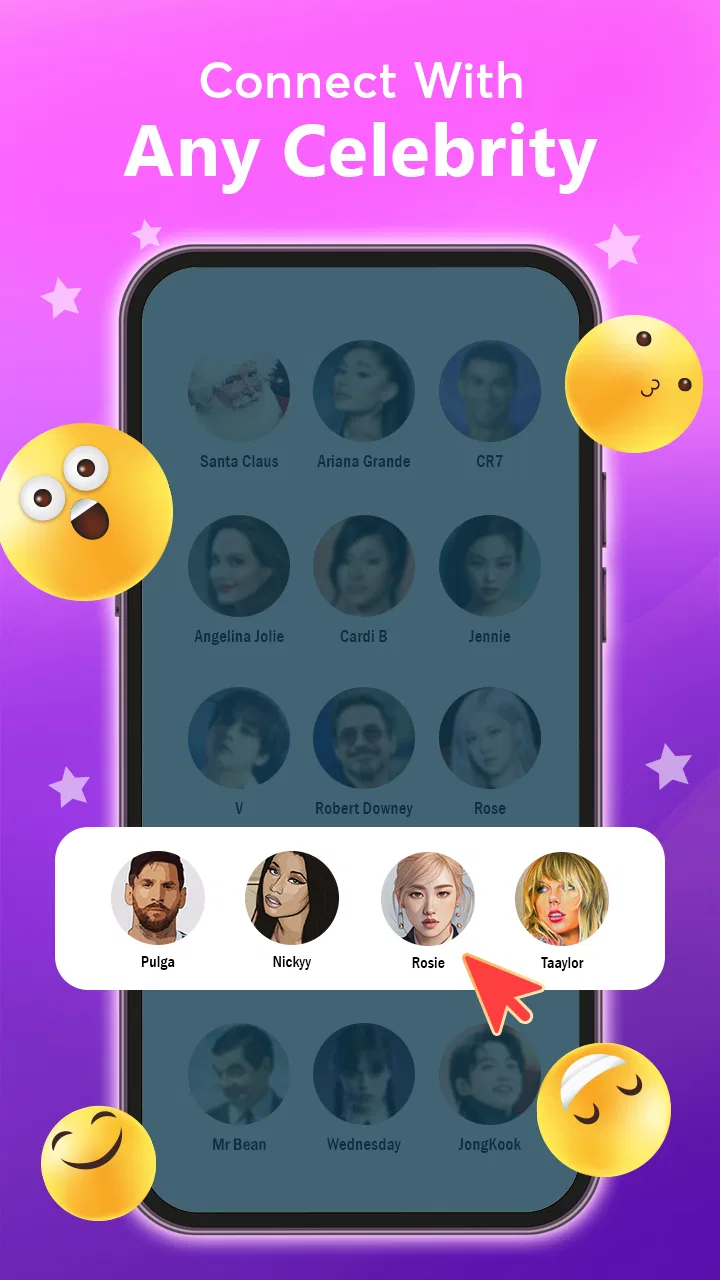
Idol Prank Video Call & Chat is an entertainment app that allows users to simulate video calls and chats with their favorite idols. Users can choose from a selection of pre-recorded videos and messages to receive a realistic interaction. The app is designed for fun and does not connect to real celebrities.
02Is Idol Prank Video Call & Chat free to use?
The app offers a free version with basic features, but it may include ads. For an ad-free experience and additional features, such as more idols and exclusive content, users can opt for in-app purchases or a subscription model. Pricing details are available within the app.
03Can I customize the prank calls in Idol Prank Video Call & Chat?
Yes, the app provides some customization options. Users can select different idols, modify call times, and choose from various scripts to enhance the prank experience. However, the level of customization may vary depending on whether you are using the free version or have purchased additional features.
04Is Idol Prank Video Call & Chat safe for children?
The app is designed for entertainment purposes and generally safe for children, but parental guidance is recommended. It contains simulated content that might not be suitable for all ages. Parents should review the app's content and privacy settings to ensure it aligns with their child’s maturity level.
05Does Idol Prank Video Call & Chat require an internet connection?
Yes, the app requires an internet connection to download and update its content, including videos and chat scripts. Some features may work offline once the content has been downloaded, but for the best experience, a stable internet connection is recommended.
Pros
- Realistic call simulation enhances user experience.
- Wide variety of idols to choose from for calls.
- User-friendly interface with intuitive navigation.
- Customizable call settings for personalized experience.
- App is lightweight and doesn't drain battery.
Cons
- Limited free features; many require in-app purchases.
- Occasional ads can interrupt user engagement.
- Audio quality varies depending on connection.
- Some users report infrequent app crashes.
- Limited personalization options for chat interface.

Idol Prank Video Call & Chat
Gallery